
A gag can make clear speech difficult or impossible, so a verbal safeword should not be the only way to signal that you want to stop. The fix is to agree on a non-verbal signal before you start — a hand signal, a dropped object, or a tap-out — and test it once so you both know exactly what it means. The specific signal matters less than three things: you agreed on it in advance, you practiced it, and the person wearing the gag can do it easily.
Quick answer: agree on one primary non-verbal signal and, when practical, one backup that works independently; test both in the actual position before play; and treat a missed or unclear response as a reason to pause and check, not as permission to continue. No single signal is foolproof — the goal is a signal that is simple, observable, and physically possible for the wearer to perform.
In this guide
- Why a verbal safeword doesn’t work with a gag
- Three simple non-verbal signals for gag play
- How to agree on and test a signal before the gag goes in
- What the active partner should watch for
- What to do if the signal fails
- Signals that still work when your hands are restrained
- Choosing a gag for easier communication and removal
- FAQ
Why a Verbal Safeword Doesn’t Work With a Gag
A safeword works when it is clear and immediately recognizable. A gag removes exactly that: it fills the mouth and limits speech, so “red” comes out as a muffled grunt, if it comes out at all. Even a ball gag that leaves the nose uncovered can make clear speech difficult or impossible.
That is why the non-verbal signal is not an optional extra for gag play. It is the primary stop signal once the gag is on. Whatever you use as a verbal safeword during the rest of your play, you need a second system that works without words.
Three Simple Non-Verbal Signals for Gag Play
No single signal is foolproof. A signal only works if it is simple, observable, and physically possible for the wearer to perform — and even then, it can be missed. The right approach is to pick a primary signal that is unlikely to happen accidentally during play, practice it, and treat it as the stop system while the gag is in.
- A hand signal. A common approach is a squeeze pattern: two quick squeezes of your partner’s hand, or an open-and-close fist. Choose a pattern that is unlikely to happen accidentally during play — a random squeeze during an intense moment should not be mistaken for a stop. If your hands are free, this is the easiest thing to teach and to read.

A hand squeeze is a simple non-verbal stop signal to agree on before the gag goes in.
- A dropped object. Hold something small and solid — a set of keys, a small ball — and agree that releasing it means “stop now.” A small object works as a visual signal if the wearer can release it easily and the partner has a clear view of where it will fall. Think about the practical details: if it rolls away, gets covered, or lands out of sight, the signal is lost, so agree on where the drop will land.
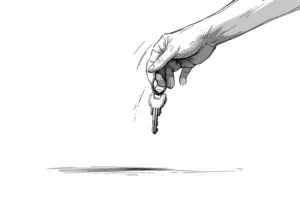
Dropping a small object is a visible way to signal stop when speech is limited.
- Taps, foot signals, or pre-agreed sounds. Tap your partner twice, stamp a foot, or make a specific sound you both agreed on: three grunts, a particular hum. A sound only counts if the wearer can reliably produce it from the planned position and the partner can reliably recognize it over the noise of the scene. This is the fallback when your hands are not free.
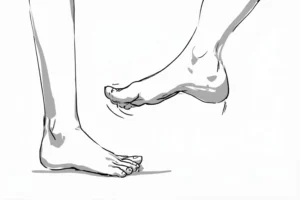
A foot tap or nudge can work as a stop signal when hands are restrained.
Pick one primary signal. Use one primary signal and, when practical, one backup signal that works independently — for example, a hand squeeze as the primary and a foot tap as the backup, so that if one becomes impossible, the other is still available. Keep the primary one simple: in the moment, a person who needs to stop should not have to remember a menu.
How to Agree on and Test a Signal Before the Gag Goes In
The signal only protects you if it is agreed on and tested before the gag is in.
- Choose the signal and say it out loud. “Two squeezes means stop the activity and remove the gag.” Say it plainly so you both hear the same meaning.
- Do a dry run. Put the gag in briefly — or just mime it — and have the wearer perform the signal while you watch. Confirm you can both recognize it.
- Define exactly what “stop” means. The signal means stop the activity and remove the gag, every time — not “slow down” and not “almost done.”
- Test the signal in the actual position. If the wearer will be kneeling, lying down, or restrained, test the signal from that position — a signal that works standing may not work when hands are behind the back. If there is no signal the wearer can reliably perform from the planned position, the gag should not go on.
Testing is the part most people skip, and it is the part that actually makes the signal reliable.
What the Active Partner Should Watch For
A signal is a backstop, not a substitute for attention.
- Check in regularly. A quick squeeze-back or a nod confirms that the wearer is okay with continuing at that moment. Check in at natural pauses or when the position changes; the right frequency depends on the activity, the restraint level, and how easily the wearer can respond. Do not rely on the signal alone.
- A missed response is not consent to continue. If you ask for a squeeze-back and get nothing, treat it as a reason to pause and check — not as permission to keep going. A person who is tired, distracted, or panicking may not be able to respond, and that is exactly when you need to stop.
- Watch body language. Even with a working signal, a person who has gone quiet and still may be struggling to remember to use it. If anything looks off, stop and check.
- Do not leave a gagged partner unattended. Staying within sight and reach allows you to respond quickly if something goes wrong.
- When in doubt, check. If you are not sure whether the signal happened, treat it as a stop and ask.
If the mental side — the fear of losing control or panicking — is what makes you want a rock-solid signal in the first place, our guide to gag anxiety talks through that layer separately.
What If the Signal Fails?
Signals can fail. The object drops but nobody notices. The wearer cannot make the agreed sound. The partner is unsure whether what they saw was the signal. The scene gets noisy or the position shifts. Plan for this before it happens:
- If the agreed signal is not seen, understood, or physically possible to perform, stop the scene and remove the gag rather than trying to continue communication through the gag. The pause is not a negotiation; it is the default when communication is uncertain.
- Never create a setup where the wearer has no reliable way to communicate that they need the gag removed. If the primary signal is blocked and there is no backup that works from that position, the gag comes off.
- Agree in advance that “unsure” means “stop.” When in doubt, the safest interpretation is that the signal happened or that communication is broken — either way, you stop and check.
This is the layer most safety guides skip, and it is the one that matters when things do not go according to plan.
Signals That Still Work When Your Hands Are Restrained
If the wearer’s hands are restrained, hand signals are out. Move to the systems that need no hands:
- A foot tap or stomp, if the legs are free.
- A distinct noise — three grunts, or a specific hum — that cuts through the scene, provided it can be reliably produced and recognized from the planned position.
- A dropped object, only if the wearer can demonstrably release it from the restrained position and the partner has a clear view of the drop. If the hands cannot open enough to release it, do not rely on this one.
The rule is the same as before: the signal must be something the bound person can still do, and you must have tested it while they were in that position. If there is no signal the wearer can reliably perform, the gag should not go on.
| If you are… | A signal that works |
| — | — |
| Hands free, sitting or kneeling | Two hand squeezes, or an open-close fist |
| Hands free but you want something impossible to miss | A dropped object (keys, a small ball) in a clear drop zone |
| Hands restrained, legs free | A foot tap or stomp |
| Movement significantly restricted | A pre-agreed sound the wearer can reliably produce and the partner can reliably recognize |
| Unsure the signal will be seen or heard | Do not gag — talk it through first |
Choosing a Gag for Easier Communication and Removal
An adjustable design can make it easier to achieve a secure fit without overtightening, while a straightforward fastening system can make removal simpler when a stop is called. The Breathable Silicone Ball Gag uses a soft silicone ball and an adjustable strap, with an open nose area rather than covering the nose. If you are new to gags, focus first on fit, adjustability, and whether the wearer can communicate clearly through your agreed signal system. Our ball gag size guide and how to choose a ball gag cover sizing and fit in more detail, and the beginner’s guide to mouth gags covers types and first-time setup if you are starting from scratch.
FAQ
Can you use a verbal safeword with a gag in?
A verbal safeword should not be the only stop signal once a gag is in place, because the gag can make speech unclear or impossible. Agree on a non-verbal signal before play begins and treat it as your stop system while the gag is worn.
What is a good non-verbal safeword for a gag?
The best signal is one the wearer can perform immediately and the partner can recognize without ambiguity. A hand squeeze, foot tap, or pre-agreed sound can work depending on the setup. Pick one primary signal and, when practical, one backup that works independently.
What if my hands are tied?
Use a signal that does not depend on your hands, such as a foot movement or a pre-agreed sound, provided you can reliably perform it from the planned position. If there is no signal you can reliably perform, the gag should not go on.
How often should the active partner check in?
Check in regularly and at natural pauses or changes in position. The exact frequency depends on the activity, the restraint level, and how easily the wearer can respond. A missed response should be treated as a reason to pause and check, not as consent to continue.
Do I still need a verbal safeword before the gag goes on?
Yes. A verbal safeword remains useful before the gag is in place and during any part of the scene when speech is possible. The non-verbal signal is an additional system for the period when speech is restricted.
Bottom line
If you only remember one thing: a gag removes speech, so your stop signal has to be non-verbal, agreed on in advance, and tested — and no single signal is foolproof. Pick one primary signal and one backup that works independently, test both from the actual position, and treat a missed response or an unclear moment as a reason to pause and remove the gag. Check in regularly, stay within sight and reach, and never create a setup where the wearer has no reliable way to say stop. Browse the full mouth gag collection when you are ready to pair a signal system with a gag that fits comfortably.
About this guide
This guide offers general information about non-verbal signals and gag safety for educational purposes. It is based on common BDSM community safety practice — not on medical advice or a safety guarantee. Every partnership is different, so agree on signals and boundaries that work for the two of you, and go at the pace of the more cautious person.
—
Meta description(发布时用):
Learn how to use non-verbal safewords with a gag, including hand signals, dropped objects, tap-outs, backup signals, and ways to test them before play.