
A ring gag (also called an O-ring gag) holds your mouth open with a ring instead of filling it with a ball. There is nothing to bite down on — the ring sits between your teeth and keeps the mouth open, so speech is limited but the mouth stays visibly open. Below we cover how it differs from a ball gag, how to choose the ring material, and what to check before wearing one.
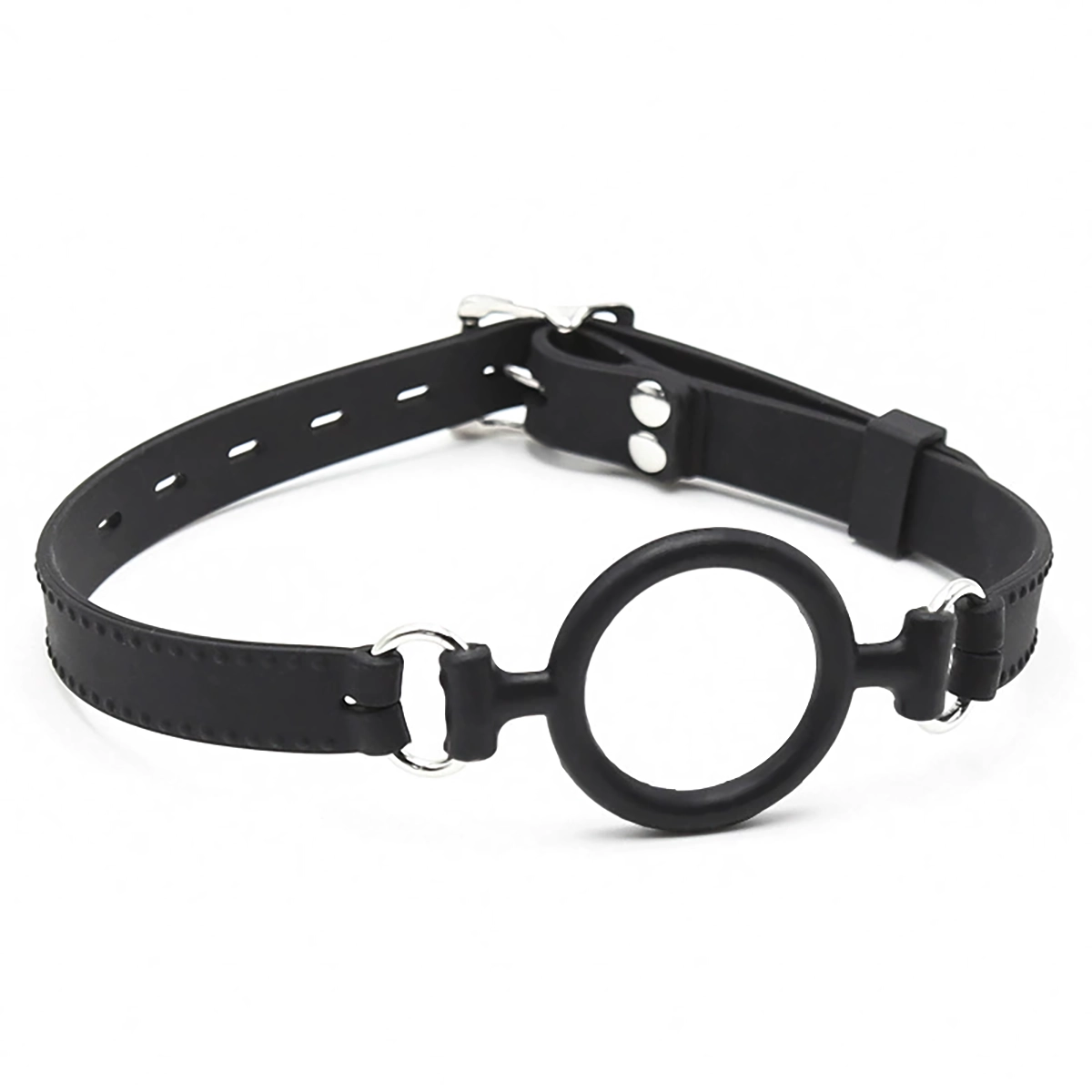
What a Ring Gag Is (and How It Differs from a Ball Gag)
A ball gag puts a sphere between your teeth, so the mouth closes around the ball. A ring gag does the opposite: the ring keeps the jaw open, with an opening in the middle. Nothing fills the mouth. Speech is limited either way, but the sensation and the look are different.
That difference is about design, not about one being inherently safer. Both limit clear speech, and both need the same care around breathing and signals. What changes is how open the jaw sits and whether there is a clear opening through the middle.
Choosing the Ring Material
Ring gags come in a few materials, and the choice changes the feel:
| Ring material | What it is | Feel and fit | A possible fit for |
|---|---|---|---|
| Silicone ring | A soft, non-porous ring | Softer against the teeth, easier to clean | People who prefer a softer surface against the teeth |
| Metal ring | A rigid steel or alloy ring | Firm, holds the mouth more open, heavier | People who want strong, fixed open-mouth control |
| Silk-wrapped ring | A core ring wrapped in fabric | Softer surface, more about the look | People who want a softer finish or a specific aesthetic |
If you are deciding between them, start with what matters most to you. If you want a softer ring against the teeth, silicone may be worth considering. If cleaning matters, non-porous silicone is easier to keep clean than fabric. If you want firm, fixed control, a metal ring is the direction to look.
How a Ring Gag Fits (and How to Put One On)
A ring gag uses a strap that runs behind the head, the same basic setup as other gags. The strap should be snug enough to hold the ring in place but loose enough that you can move your jaw a little and breathe through your nose without strain.
The ring itself should sit between the teeth, not press hard against them. If the ring is too large for your mouth, it may force the jaw wider than is comfortable. If the fit is too loose or unstable, it may move out of position. Our size guide explains how jaw size and mouth opening relate, which helps if you are choosing a first ring.
If you are new to any gag, start with a short session — a minute or two — and agree on a clear non-verbal signal beforehand. We cover the signal options in our guide on non-verbal safewords.
What It Feels Like and Who Chooses One
With a ring gag, the mouth is held open, so drooling is common and speech is limited. Some people like the open-mouth look and the way it keeps the jaw from closing; others find the open position tiring after a while. Neither is better overall — it comes down to which sensation and look you want.
People often look at ring gags when they want the open-mouth look, or when a ball gag feels too filling. They are also a way to change things up if you already know you like the feel of a gag but want a different kind of control.
Material Matters
The ring is the part that touches your teeth and mouth, so check it carefully. A non-porous material — silicone, for example — is easier to clean thoroughly than fabric. A silicone ring is also softer against the teeth than a metal ring. Metal is firmer and heavier, so the pressure against the teeth can feel more noticeable.
If a ring is sold as TPE (thermoplastic elastomer), know that TPE is a separate material class from natural latex — it is not the same thing, so do not treat the labels as interchangeable. For a broader look at gag materials, our materials guide goes into more detail. Straps are often PU leather (polyurethane over a fabric base), which is not genuine leather; check the product specifications rather than assuming that “leather” means genuine leather.
Hygiene and Safety Notes
A ring gag goes in the mouth, so treat it as personal gear: clean it before first use and after every use, and keep it to one person unless you are confident in your cleaning method. Breathing should stay easy through the nose, and you should be able to signal “stop” without words.
If the open position makes your jaw ache, or breathing feels tight, take it off rather than pushing through. Pain and numbness are reasons to stop, not signs to keep going.
Frequently Asked Questions
What is a ring gag (O-ring gag)?
It is a gag that holds the mouth open with a ring between the teeth, instead of filling the mouth with a ball. The mouth stays open and speech is limited.
What is the difference between a ring gag and a ball gag?
A ball gag fills the mouth with a sphere you bite down on; a ring gag keeps the jaw open with an open ring and nothing in the middle. Both limit speech, but the sensation and the look differ.
Can you talk with a ring gag in?
Not clearly. The mouth is held open, so speech is limited or impossible. Agree on a non-verbal signal before you start.
What material should an O-ring gag be?
A non-porous silicone ring is generally easier to clean than a fabric-wrapped ring. Silicone also has a softer surface than a rigid metal ring, while metal provides a firmer feel.
Is a ring gag right for a beginner?
It can be, if you start short and use a clear non-verbal signal. A silicone ring has a softer surface than a rigid metal ring, while a metal ring provides a firmer feel. Which works better depends on your preferred sensation and how the ring fits.
A Ring Gag to Consider
If you are interested in an open-mouth design, compare ring gags by material, fit, and the feel you want. A silicone O-ring gag is one option to consider. Browse the full range in the gag collection to compare ring, ball, and tongue styles side by side.